Permaculture for Forest Landscape Restoration
Project Purpose
Abaya and Chamo Lakes—two ecologically vital water bodies in Ethiopia’s Great Rift Valley near Arba Minch—are facing severe environmental degradation. Deforestation and unsustainable land use practices in their catchment areas have led to biodiversity loss, ecosystem fragmentation, and increased siltation in the lakes. These challenges threaten not only the ecological health of the region but also the livelihoods of local communities.
In response, the Forestry and Environmental Protection Office, in collaboration with the Forests for Future (F4F) project—funded by the German Federal Ministry for Economic Cooperation and Development (BMZ)—has launched a forest and landscape restoration initiative. This initiative aims to restore the region’s natural ecosystems while improving the socio-economic well-being of the communities living around the lakes.
Our contribution to this effort focuses on promoting Permaculture-based land restoration as an innovative and sustainable solution. By applying Permaculture principles, we offer farmers in the lake catchment area a holistic, integrated approach to natural resource management. These practices are designed to regenerate degraded landscapes, enhance soil fertility, and restore biodiversity—laying the groundwork for long-term ecological balance and resilient livelihoods.
Project Objectives
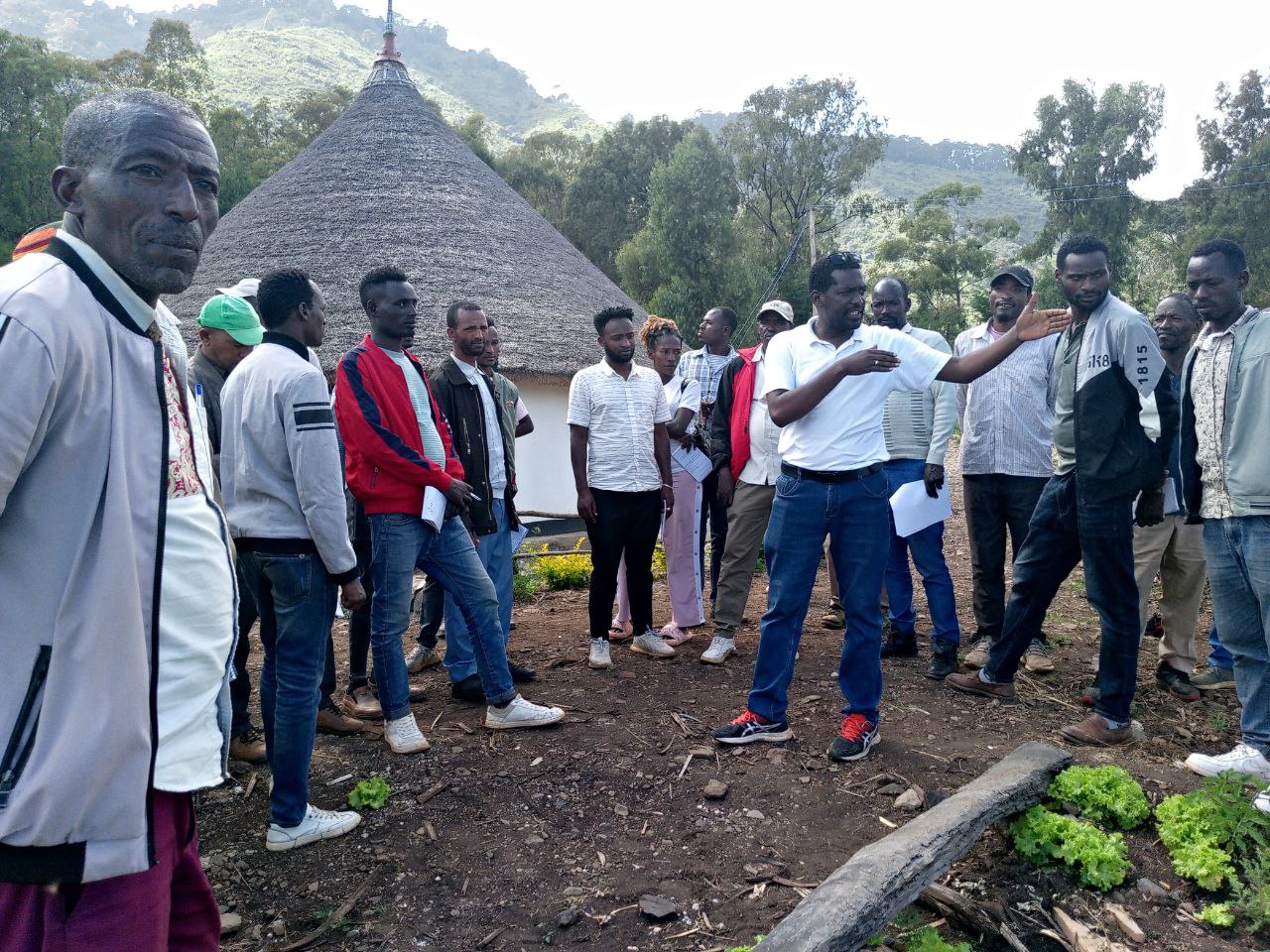
Establish Permaculture demonstration sites at two Farmer Training Centers (FTCs) and in 15 household gardens.
Demonstrate Permaculture techniques as effective tools for Forest Landscape Restoration (FLR).
Promote the integration of sustainable natural resource management within the framework of Permaculture principles.